When a Toothache Becomes a Real Emergency: What to Do About Facial Swelling and Tooth Infections in Jersey City
A toothache that keeps you up at night is miserable. But a toothache with a swollen face? That is a different situation entirely, and I want to be direct with you about why. A tooth infection that has spread beyond the tooth itself is not something to sleep on, manage with ibuprofen, or put off until you find a convenient appointment slot. In some cases, it becomes life-threatening within days. I see this in my practice at Limitless Dental® in Jersey City, and I want you to understand exactly what is happening inside your jaw, when it is safe to wait, and when it absolutely is not.
This post answers the questions I hear most often: Is the swelling normal? Do I need the ER? Why are the antibiotics not working? I will give you straight answers, in plain language, so you can make the right call for your health.

Is It Normal for Your Face to Swell from a Tooth Infection?
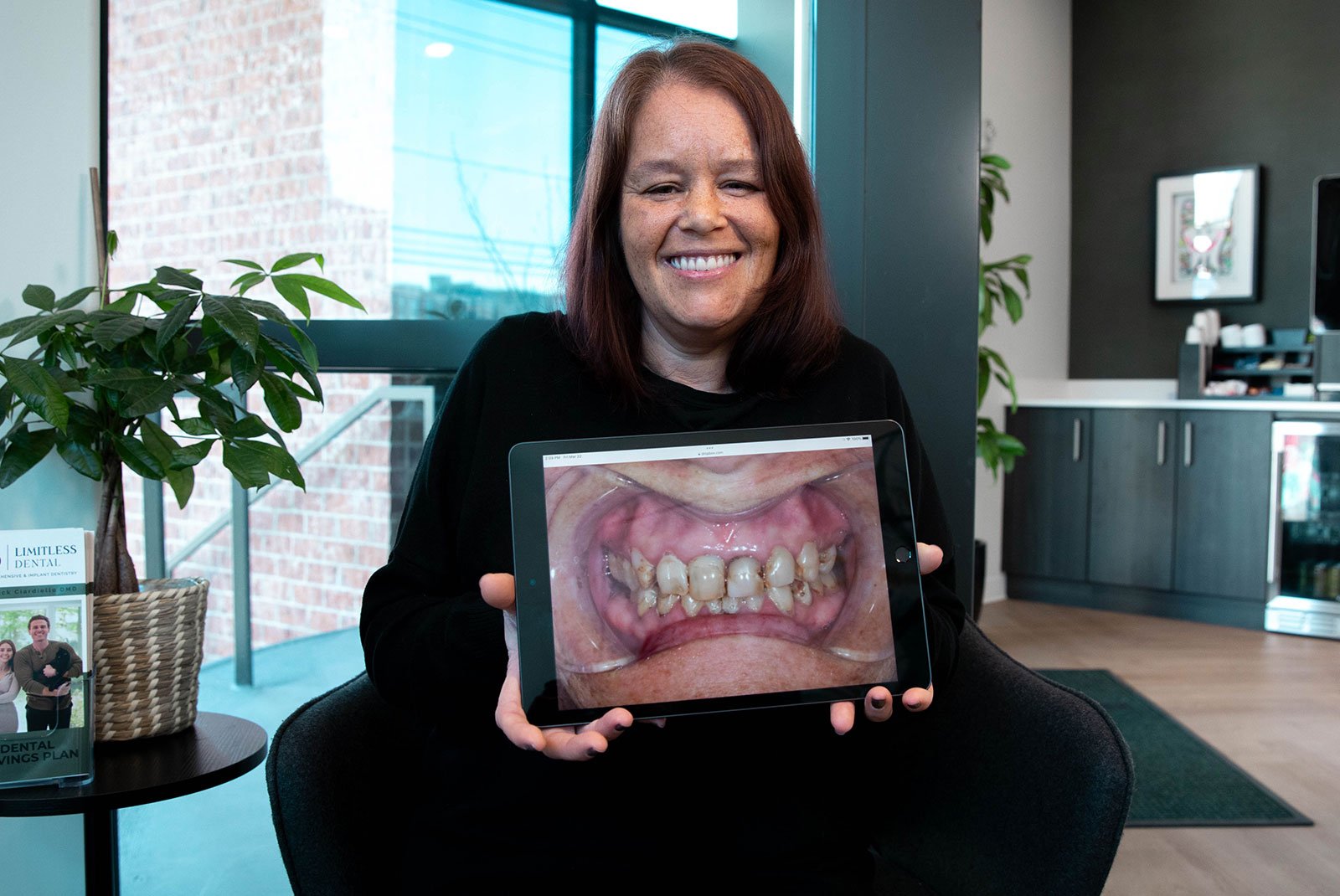
Yes, facial swelling can happen with a tooth infection, but it is never something to treat as normal or routine. Swelling means the infection has moved outside the tooth itself and is spreading through the surrounding tissue and bone. That is a clinical signal that the situation is escalating.
Here is what is happening inside. A tooth that has a dead or severely infected nerve becomes a breeding ground for bacteria. Those bacteria multiply, form a pocket of pus called an abscess, and then follow the path of least resistance through the jaw, into the cheek, under the chin, or down toward the neck. The puffiness you feel on the outside of your face reflects how far that process has gone.
In my practice, I regularly see patients who noticed a little swelling one day and waited three or four days hoping it would calm down on its own. By the time they came in, the infection had spread well past the original tooth. The jaw was involved. In a few cases, the neck was starting to swell. Swelling from a tooth infection does not resolve on its own. It either gets treated, or it gets worse.
Early swelling is usually localized: a puffy cheek, tenderness along the jaw, or a noticeable lump near the gum line. That is still urgent, but it is manageable at a dental office. Late-stage swelling, the kind that moves into your neck or pushes upward toward your eye, is a different emergency entirely.
When Is a Swollen Face from a Tooth a 911 Emergency?
If you have any of the following signs right now, stop reading and call 911 or go directly to the emergency room. Do not call a dental office first. These signs mean the infection may be threatening your airway or entering your bloodstream, and that requires a hospital, not a dental chair.
- Swelling spreading to your neck or under your chin
- Difficulty swallowing or breathing
- Fever above 103°F (39.4°C)
- Trismus: you cannot open your mouth more than two finger-widths
- Swelling moving upward toward your eye
- Feeling confused, extremely ill, or unable to stay awake
These signs can indicate Ludwig’s angina (a rapidly spreading infection of the floor of the mouth and neck) or early sepsis, both of which can close off the airway or go systemic fast. I want to be clear: these are rare outcomes, but they happen, and they happen to people who waited too long.
What does tooth sepsis feel like?
Tooth-sourced sepsis goes beyond oral symptoms. You will feel sick all over: high fever, chills, rapid heart rate, confusion, or extreme fatigue. The infection has left the mouth and entered the bloodstream. At that point, the body’s immune response becomes the danger. This is a medical emergency and requires IV antibiotics and hospital monitoring, not a dental appointment. If you feel systemically unwell alongside a dental problem, the ER is the right call.
Should I Go to the ER for a Swollen Face from a Toothache?
If you do not have any of the life-threatening warning signs listed above, your first call should be to a dentist, not an emergency room. The ER is the right place for a threatened airway. It is not the right place to get a tooth infection resolved, and there is a meaningful clinical reason for that distinction.
A 2019 study in the Annals of Emergency Medicine found dental-related conditions generated approximately 2.2 million emergency room visits per year between 2011 and 2015 in the United States.1 That is an enormous volume of patients arriving at ERs for a problem that ERs are not set up to fix. Emergency physicians can evaluate swelling, prescribe antibiotics, manage pain, and intervene if there is an airway concern. What they cannot do is perform the root canal or extraction that actually eliminates the source of the infection. If you leave the ER with a prescription and no dental follow-up, the infection will come back.
For a clear breakdown of what counts as a true dental emergency and how to handle it, see our dental emergency guide for Jersey City patients.
Will the ER do anything for a tooth abscess?
Yes, but not enough to solve it. Research published in the Annals of Emergency Medicine found that antibiotics were prescribed in 65% of dental-related ER visits, even though “recommended treatments for these conditions are usually dental procedures rather than antibiotics.”1 The ER buys you time. It does not close the case.
The average cost of an ER visit for a periapical abscess is $1,080.50, and for patients who require hospitalization, that figure rises to an average of $34,245.2 A dental office visit to treat the same infection costs a fraction of that and actually addresses the source. If you are in Jersey City and not in the danger-sign territory listed above, call a dentist first.
Why Is My Tooth Abscess Still Swollen After 7 Days of Antibiotics?
Antibiotics reduce the bacterial load in the surrounding tissue, but they cannot drain an abscess or repair the dead tooth that is producing the infection. If swelling is persisting after a week on antibiotics, the source has not been treated.
Here is the clinical picture. The bacteria living inside the infected tooth pulp have no blood supply to fight. Antibiotics work through the bloodstream. They reach the inflamed tissue around the tooth reasonably well, but inside the pulp chamber itself, there is no circulation, so the medication cannot penetrate effectively. The bacteria keep multiplying. The tissue around the tooth stays inflamed. The swelling does not resolve.
I get calls from patients in this exact situation every few weeks. They have been on amoxicillin for a week and they are confused and frustrated. What I explain is this: the antibiotic is doing its job on the tissue outside the tooth. But the tooth is still the source. Until we either perform a root canal to remove the infected pulp or extract the tooth entirely, the infection has a home base. It will keep coming back.
Antibiotics are a critical part of treatment when tissue infection is present, but they are never the whole treatment. If your dentist prescribed antibiotics without scheduling a procedure to follow, that follow-up appointment is not optional.
Why does an abscess lump stay after antibiotics finish?
The lump you feel near the gum line is often a sinus tract or a localized accumulation of pus. Antibiotics can reduce surrounding inflammation, but the physical pocket of pus requires drainage through a dental procedure. The body cannot reabsorb a sealed abscess on its own. The lump persisting is a sign that the source has not been treated, not that the antibiotics failed.
How Long Will My Face Stay Swollen from a Tooth Infection?
With proper dental treatment, most patients see significant improvement in swelling within 48 to 72 hours. Without treatment, it will not resolve on its own and will continue to progress.
Once the source is removed (through root canal treatment or extraction) and drainage is established, your immune system can start clearing the infection from the tissue. Most patients feel dramatically better within two days. Some residual puffiness can persist for four to five days as the tissue settles.
If you are on antibiotics and the swelling is shrinking slowly, that is a good sign, but it does not mean the infection is gone. You still need the dental procedure. Swelling that is not improving after three to four days of antibiotics, or swelling that is actively growing, is a sign to call your dentist immediately and, if after hours, to go to the ER.
Can I Wait Two Weeks for a Tooth Abscess?
No. A tooth abscess should not wait two weeks. In some cases it should not wait two days. The infection does not pause while you wait for a more convenient time, and it does not need two weeks to reach structures that can become life-threatening.
Between 2008 and 2014, periapical abscess accounted for more than 3.5 million emergency room visits nationwide, with cases rising year over year.2 Many of those visits represent patients who delayed dental care and ended up in a hospital instead. The cost of that delay, financially and medically, is significant.
I understand that cost, insurance coverage, and schedule constraints are real barriers. I hear them from my patients in Jersey City and Hoboken every week. If cost is the reason you are considering waiting, please call us first. We will talk through what your options actually are, including routine general dentistry care financing and payment plans. Waiting two weeks with an active tooth infection is a genuinely dangerous decision, and I do not want you to make it based on incomplete information about what treatment costs.
What Happens at the Dentist for a Tooth Infection?
When you come in with facial swelling and tooth pain, here is exactly what we do at our Jersey City office, step by step.
First, we take a low-radiation digital x-ray to locate the infection and see how far it has spread into the bone. In more complex cases, we use our CBCT 3D imaging to get a full three-dimensional picture of the jaw and surrounding structures. Our Pearl AI diagnostics review color-codes areas of concern on the x-ray, flagging bone changes that can be subtle on a standard view. This gives us a precise map of what we are dealing with before we touch anything.
Second, we numb the area. Most patients hold their breath at this point, and I get it. But I apply a topical numbing gel before the injection, and by the time the needle goes in, most patients are surprised by how little they feel. You should not be in pain during treatment. If you are, we stop and adjust.
Third, we treat the source. For a tooth that can be saved, that means a root canal to remove the infected tissue from inside the tooth, clean the canals, and seal them. For a tooth that is too damaged to save, it means extraction. In some cases, we make a small incision to drain the abscess directly if it is fluctuant and accessible.
Fourth, we prescribe antibiotics to clear the residual bacterial load in the surrounding tissue, now that the source has been removed.
Fifth, we see you back in 48 to 72 hours to confirm the swelling is tracking down and the infection is clearing. If you are anxious about the procedure itself, IV sedation is available. Many of our emergency patients find the combination of the Wallaby weighted blanket, noise-cancelling headphones, and sedation completely changes their experience. You do not have to white-knuckle this.
“Had an emergency wisdom tooth issue a month ago, my old dentist told me the earliest they could see me was weeks later. Dr Nick and team got me in that day and my wisdom teeth out 2 days after that. Just got a cleaning done and it was one of the most informative and painless cleanings of my life.” , Alexander G., verified Google review
We are a privately owned practice at 314 Coles Street in Jersey City, not a corporate chain. We keep emergency slots available for patients in acute situations, because the alternative, waiting in an ER for a problem that needs a dentist, costs everyone more in every sense.
Get Seen Today
If you are in Jersey City or Hoboken right now with a swollen jaw or a tooth that has been aching for days, please do not wait this out. Call our front desk at (551) 525-8284. We will get you in, look at what is actually happening on the x-ray, and walk you through your options with straight answers on what it costs and how long it takes. That is what you deserve.
References
- Roberts RM, Hersh AL, Shapiro DJ, Fleming-Dutra KE, Hicks LA. Antibiotic Prescriptions Associated With Dental-Related Emergency Department Visits. Ann Emerg Med. 2019. PMID: 30392733. https://pubmed.ncbi.nlm.nih.gov/30392733/
- Rampa S, Veeratrishul A, Raimondo M, et al. Hospital-based Emergency Department Visits with Periapical Abscess: Updated Estimates from 7 Years. J Endod. 2019. PMID: 30803531. https://pubmed.ncbi.nlm.nih.gov/30803531/