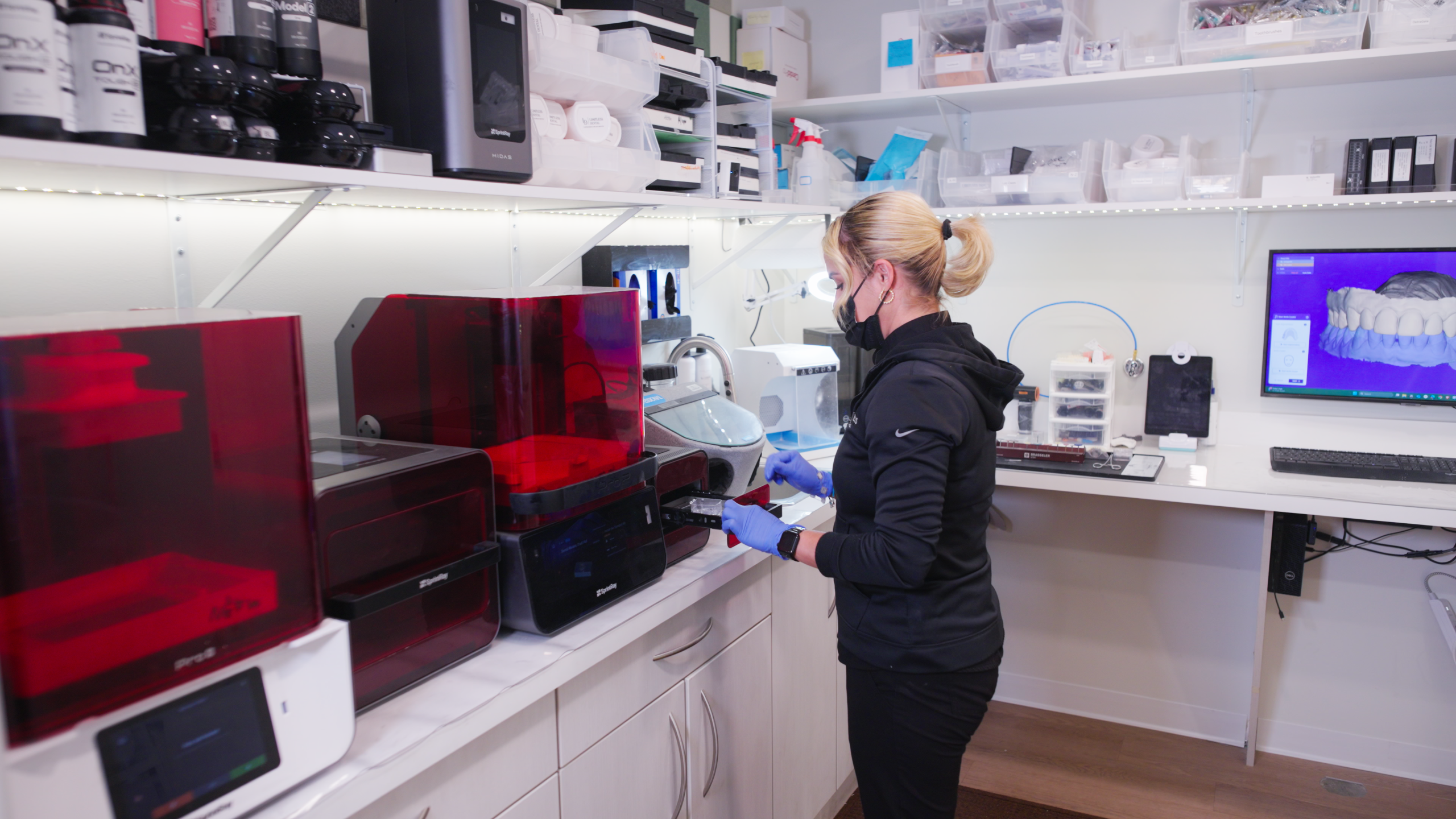
What is 3D printing in dentistry?
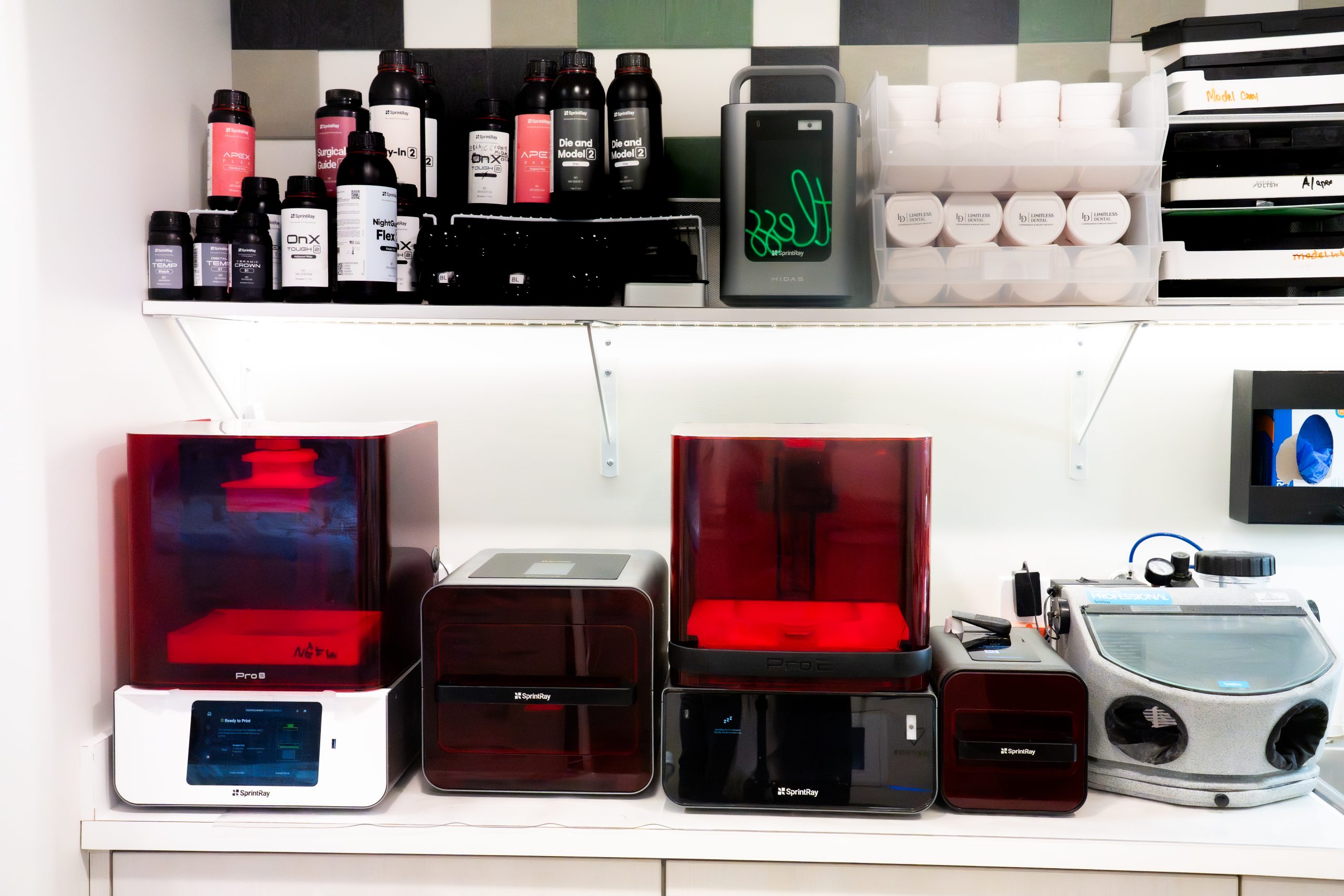
3D printing in dentistry is the process of taking a digital scan of your mouth and turning it into a real, physical piece you can wear or use the same day. We capture the shape of your teeth and gums with a small handheld scanner instead of the old impression putty. That scan goes into our design software, where I plan the shape of your crown, veneer, night guard, or surgical guide. The file then goes to one of our 3D printers, which builds the piece layer by layer out of medical-grade resin. The whole loop, from scan to finished printed piece, happens at our office at 314 Coles Street. We use three in-house 3D printers, an in-house mill, and a digital x-ray system so the planning data, the design, and the finished restoration never leave the building. That is the part that matters for you: it removes the shipping step, the outside-lab schedule, and the second appointment most patients have come to expect.What does 3D printing actually mean for your treatment?
Here is what it looks like from the patient seat:- Fewer visits. Many cases that used to take two or three appointments fit into one. A printed temporary veneer or a printed surgical guide can be ready while you finish your coffee.
- No impression goop. The scan replaces the tray of putty you bite into. It is faster, more comfortable, and easier on a sensitive gag reflex.
- Better fit on the first try. Because the design is digital, the printed piece is built from the same data the scanner captured. There is no manual model or mold step that can introduce error.
- Easier preview of your smile. For cosmetic cases we can print a try-in version of your new smile so you can see and feel it before we touch a tooth.
- Same-day options for the right cases. When a printed restoration is the right material for your situation, you can leave with the tooth fixed the same day.
Where you will see 3D printing in your care at Limitless Dental®
These are the most common places 3D printing shows up at our Jersey City office:- Same-day crowns and printed veneers. We print a temporary or a definitive piece in the same appointment, so you can leave with the tooth restored. More on the difference between printed and porcelain options below, and on our same-day crowns and veneers page.
- Night guards, retainers, and bite splints. Printed appliances fit better than the boil-and-bite kind from a drugstore because they are built from your real tooth shape.
- Cosmetic try-ins. Before any veneer case, we print a wearable mock-up so you can preview your new smile in your own mouth.
- Model work for the lab. Even when the final piece is porcelain from our in-house lab, the printed model is what your ceramist works on.
Are 3D printed crowns and veneers safe?
Yes. The resins we print with are medical-grade materials cleared for intraoral use. The printed piece is finished, cured, and polished in our lab before it ever touches your tooth. The bigger question, the one I get asked the most, is not “is it safe,” it is “is it as strong as porcelain.” That is the question worth answering. For everyday biting forces and for cosmetic front teeth that do not take heavy grinding load, a well-bonded printed restoration performs reliably. For back molars that crush food, for patients who grind heavily, or for full-mouth cases that need to last decades, porcelain is still the material I reach for. You should not have to think about the material science. You should hear me say “I recommend printed for this tooth because X” or “I recommend porcelain for this tooth because Y.” That is part of the consult.How long do 3D printed restorations last?
The honest answer is that printed materials are newer than porcelain, so we have shorter long-term data. Our in-house “What You Can Expect” sheet for veneers, which we hand to patients during the consult, lists these durability ranges based on what we have seen and what current literature supports:- Porcelain veneers: typically 10 to 15 years with good home care and regular cleanings.
- 3D printed veneers: typically 5 to 7 years before they may need replacement or refresh.
3D printed or porcelain: how I decide for your case
When you sit down for your consult, I look at four things before recommending one over the other:- The tooth. Front teeth that show in your smile, with light biting forces, are good candidates for printed restorations. Back molars that grind food, or teeth in a heavy bite, lean toward porcelain.
- Your bite. If you grind at night, if you have a deep bite, or if you have already broken restorations in the past, porcelain holds up better. We will also build you a printed night guard either way.
- Your goal for how long it should last. If you want a 10-plus year result, porcelain is the better fit. If you want a faster, lower-cost option and you understand it may need replacement sooner, printed is a real option.
- Cost and timeline. Printed is typically less expensive and faster. Porcelain typically costs more and takes one extra visit. We will walk you through your specific numbers in the consult, and we will talk through CareCredit, Cherry, Sunbit, and Proceed Finance if monthly payments fit better.
What our patients say
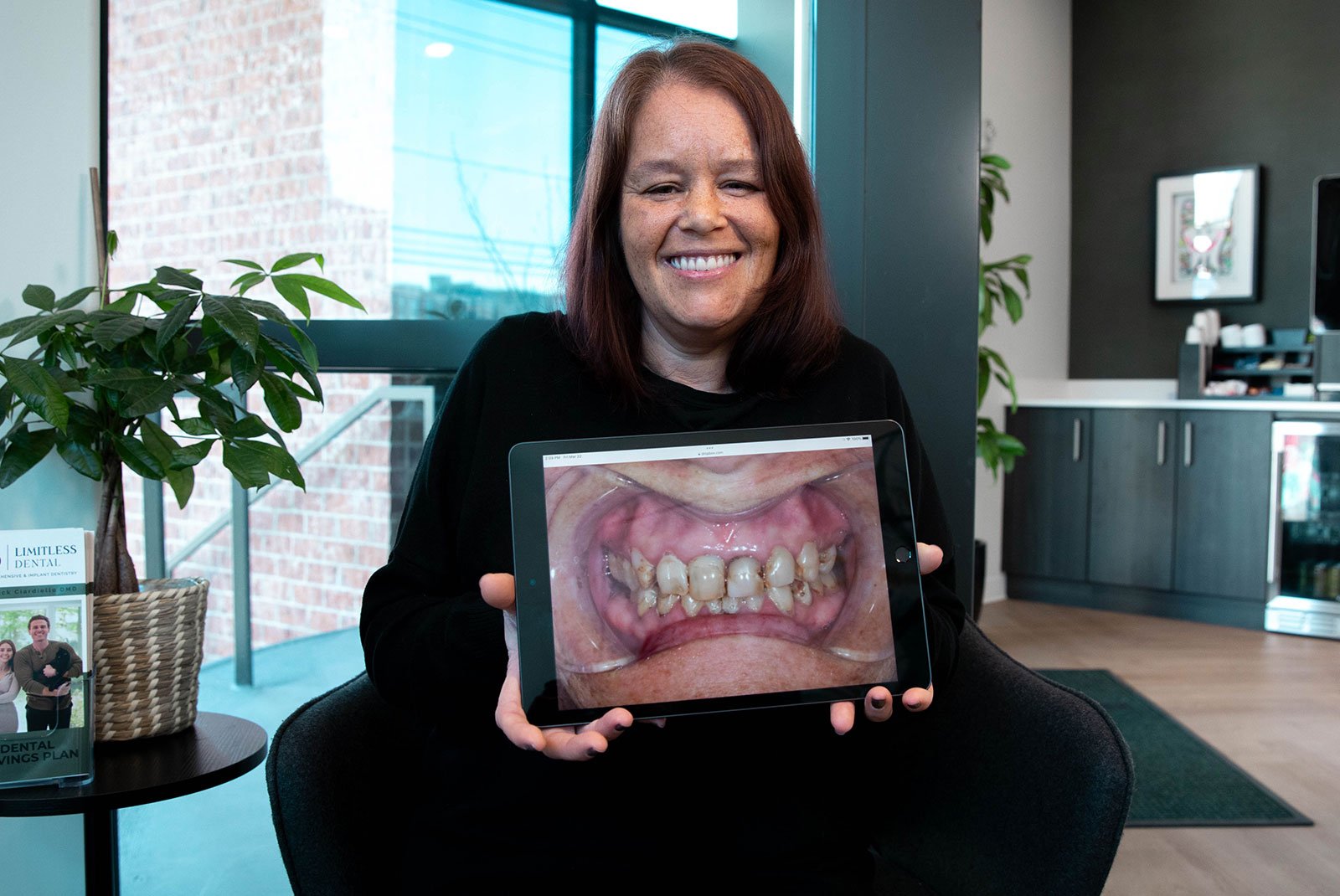
This is Raquel, talking about her veneer experience with our digital workflow:“After years of wanting veneers, I finally decided to get them. I was extremely nervous about starting the process and wanted to find someone I could trust with my smile. Their technology is incredible, they make you feel truly cared for, and the results are simply outstanding!” Raquel P., Limitless Dental® patient.
What about implant spacing? The numbers patients ask about
Patients ask me this because it shows up alongside 3D printing searches. In implant dentistry, there are well-studied spacing guidelines that protect the bone and the gum between implants. The most cited one comes from Tarnow, Cho, and Wallace (Journal of Periodontology, 2000): when two implants are placed next to each other, leaving more than 3 millimeters of bone between them results in much less crestal bone loss than spacing them 3 millimeters or closer. There are similar guidelines for the distance between an implant and a neighboring natural tooth. The reason this matters: we confirm these distances using your CBCT 3D image during the implant planning, before the surgical guide is even printed. If you want to dig into implant treatment specifically, our dental implants page has the full overview.Frequently asked questions about 3D printing in dentistry
Why is 3D printing important in dentistry?
3D printing is important in dentistry because it lets your dentist take a digital scan of your mouth and turn it into a real, finished restoration the same day. That means fewer visits, no impression putty, a better-fitting result on the first try, and the ability to preview cosmetic work before any tooth is touched. At Limitless Dental® we print on three in-house 3D printers in our own lab, so the design and the finished piece never leave the building.How long do 3D printed dentures and veneers last?
3D printed veneers typically last 5 to 7 years with good home care and regular cleanings, based on what we see in our practice and current published data. Porcelain veneers typically last 10 to 15 years. Printed dentures fall in a similar range to printed veneers and need to be checked at every recall visit. Your bite, your grinding habits, and how well the restoration was bonded are bigger factors in longevity than the material alone.Can you eat with 3D printed dentures and restorations?
Yes. You can eat normally with a 3D printed denture or restoration once it has been finished, fitted, and you have had time to get used to it. For a printed denture, start with softer foods for the first few days and avoid very hard or sticky items. For a printed crown or veneer, you can eat the same day as long as the bonding is complete. We will give you specific aftercare during your visit.Are 3D printed crowns and veneers safe?
Yes, 3D printed crowns and veneers are safe when they are made from medical-grade dental resins and properly cured, finished, and bonded by a trained dentist. The materials we use at Limitless Dental® are intended for intraoral use. The real clinical question is whether printed or porcelain is the better long-term fit for your specific tooth and your specific bite. We answer that in your consult.What are the benefits of 3D printing in dentistry for patients?
The main benefits of 3D printing in dentistry for patients are fewer appointments for the same treatment, no messy impression putty, faster turnaround for crowns, veneers, night guards, and surgical guides, better-fitting restorations on the first try, the ability to preview cosmetic work before it is bonded, and lower lab fees that often translate to lower patient cost on certain procedures.Are 3D printed restorations worth it?
3D printed restorations are worth it for the right tooth, the right bite, and the right goal. They cost less than porcelain, get done faster, and perform reliably on front teeth and lighter biting situations. For heavy back molars, heavy grinders, or full-mouth cases that need to last decades, porcelain is still the better long-term call. The right answer depends on your case, and that is exactly what the consult is for.Do dentists actually use 3D printing every day?
Yes, in offices that have invested in the equipment and trained on the workflow. We use ours every clinical day at Limitless Dental® for surgical guides, night guards, models, cosmetic try-ins, and same-day printed restorations. Not every dental practice has in-house 3D printing yet, which is why same-day care is still the exception in most places. If you are looking for a Jersey City dentist with in-house digital dentistry, you can read more about our setup on our in-house lab page.Ready to see what 3D printing can do for your treatment?
If you have been putting off a crown, a veneer, or an implant because you did not want to take time off for multiple appointments, this is the part of dentistry that changes that for you. The fastest way to know whether a printed option fits your case is to come in for a consult so I can look at your tooth and your bite in person. Call our front desk at (551) 525-8284 to schedule your visit, or text us, and we will walk you through what your specific case looks like before we do anything. Our office is at 314 Coles Street, Jersey City, NJ 07310.Ready to take the next step with Limitless Dental®? Request an appointment online or call our Jersey City office at (551) 525-8284.