Why Doesn’t Dental Insurance Cover Cosmetic Dentistry in Jersey City?
Dental insurance almost never pays for cosmetic dentistry because your policy is built to treat disease, not to improve how your teeth look. Cosmetic work like porcelain veneers, teeth whitening, and elective bonding is classified as “not medically necessary,” which puts it outside what dental plans agree to pay for. In Jersey City, most patients pursuing cosmetic care fund it out of pocket, through third-party financing, or through our in-office savings plan. A small number of procedures that look cosmetic can be partially covered when there is a real functional reason (a chipped tooth, decay, or a broken filling), and I will walk you through how that works below.
Why this matters for Jersey City patients
Most people I sit down with in our Jersey City office already looked into their insurance before they walked in. They read the fine print, called their carrier, and got a version of the same answer: “cosmetic dentistry is excluded.” What that feels like on your end is embarrassment about a smile you have wanted to change for years, plus a fear that fixing it means writing one enormous check.
You are not being singled out. Dental insurance was designed as a maintenance benefit, not a full-coverage healthcare plan. The National Association of Dental Plans (NADP) reports that most dental PPOs still cap their annual maximum at $1,500 or higher, a number that has barely moved in decades. Cosmetic treatment sits outside that maintenance model on purpose. Once you understand why the rules are set the way they are, you can plan the smile you actually want without waiting on an insurance company to change its mind.
How dental insurance classifies your care
Every dental plan sorts procedures into three buckets to decide what they pay:
- Preventive care (usually 100% covered): exams, cleanings, x-rays, sealants, fluoride. The carrier wants to catch problems early because prevention costs them less than fixing disease later.
- Basic procedures (usually 80% in-network, 60% out-of-network): fillings, extractions, root canals, and gum treatment. These are disease-based, so they get partial coverage.
- Major services (usually 50% covered): crowns, bridges, dentures. Some plans now include implants with strict frequency limits, but many still exclude them.
Notice what is missing from all three buckets: veneers, whitening, gum contouring, and any procedure whose purpose is to make your smile look better. Insurance calls these “elective,” so the coverage percentage is zero.
Those tier percentages and the $1,500 cap come directly from NADP data. Interestingly, fewer than 5% of enrollees actually hit their annual maximum in a given year, which tells you the maximum was never designed to fund big treatment plans.
Why cosmetic work is classified as elective
The insurance industry’s reasoning is straightforward. A veneer or a bleaching tray does not treat disease. If your natural tooth is intact and functional, the improvement is aesthetic. From the carrier’s point of view, paying for that improvement is like a health insurer paying for elective plastic surgery. They will not do it.
In my practice I see this frustrate patients whose “cosmetic” issue is causing real problems. Worn-down front teeth from grinding, uneven wear that has changed your bite, chipped enamel that catches food. In many cases the work you need is a mix of restorative and cosmetic. When that is true, we document the functional need, submit for the covered portion, and quote you the balance.
The exceptions: when a “cosmetic” procedure gets partial coverage
A handful of procedures that look cosmetic can carry partial coverage when there is a documented clinical reason. Whether your case qualifies depends on your plan, carrier, and clinical picture. The patterns I see most often:
- A chipped, cracked, or broken tooth: if a veneer or bonding rebuilds a tooth that broke, most plans pay their basic-procedure share of the restoration. The cosmetic upgrade (color match, shape refinement) is your responsibility.
- Decay under a front tooth: if a cavity restoration lands in a visible area, insurance treats the filling or crown as covered restorative work. Some carriers pay a metal-alloy rate and leave you to cover the difference for tooth-colored material.
- Failing old dental work: a crown from 15 years ago with a darkened margin, or a chipping bonded filling, qualifies for covered replacement in most plans. Whether the carrier pays for the newer material is plan-specific.
- Orthodontics for a functional bite problem: some plans include an orthodontic benefit (a separate lifetime maximum) that can offset Invisalign or braces when there is a real bite issue. Straightening a bite that already functions well is cosmetic and not covered.
Whitening, gum contouring, veneers placed on healthy teeth for aesthetic reasons alone, and elective bonding are almost never covered under any plan I have seen.
What porcelain veneers, whitening, and bonding cost in Jersey City
Ranges in the Jersey City and Hoboken market vary by provider, materials, and how many teeth are involved. I will not quote a specific price without seeing your case, but here is how we frame it at Limitless Dental®:
- Porcelain veneers are quoted per tooth and delivered as a set (most cases involve 6, 8, or 10 upper teeth for symmetry). Well-made porcelain veneers last 10 to 15 years with good maintenance, so it is a long-term investment rather than a one-year cost.
- 3D printed veneers cost less up front and last around 5 to 7 years. Good choice when budget is the deciding factor or you want to preview a smile change.
- Professional teeth whitening ranges from in-office single-visit to take-home custom-tray systems. Both work; the choice depends on how fast you want results.
- Cosmetic bonding is the most conservative option for small chips, gaps, or minor shape changes. Costs less than veneers but does not last as long.
One rule of thumb: the cheapest quote is rarely the best value. The difference between a veneer that lasts 12 years and one that fails at 4 is the lab, the bonding protocol, and the doctor doing the prep. Ask about material, warranty, and what happens if a veneer chips or debonds.
How to pay for cosmetic dentistry when insurance says no
Patients in Jersey City fund cosmetic care in one of four ways, or a combination.
- Cash or credit at time of service. Visa, Mastercard, American Express, cash, or check.
- Third-party financing. Four partners so patients can spread payments over time:
- Cherry, 3-month to 2-year plans. Example: 10 porcelain 3D printed veneers from around $251 per month, subject to credit approval.
- CareCredit, interest-free short-term plans plus low-interest long-term options.
- Proceed Finance, up to $60,000 with terms up to 96 months, no collateral.
My advice, having sat through hundreds of these conversations: figure out your monthly comfort number first, then reverse into the treatment plan. Some patients pay in one lump sum. Most build the smile they want over 12 to 24 months on a payment plan that fits their household budget.
What to expect at Limitless Dental®
Your first cosmetic consult at Limitless Dental® is a real conversation, not a sales appointment. When you check in, our front desk offers you a Starbucks (coffee or hot chocolate, your choice). In the operatory you get a Wallaby weighted blanket, noise-cancelling headphones, and a ceiling-mounted TV. If you drove in, we validate free garage parking.
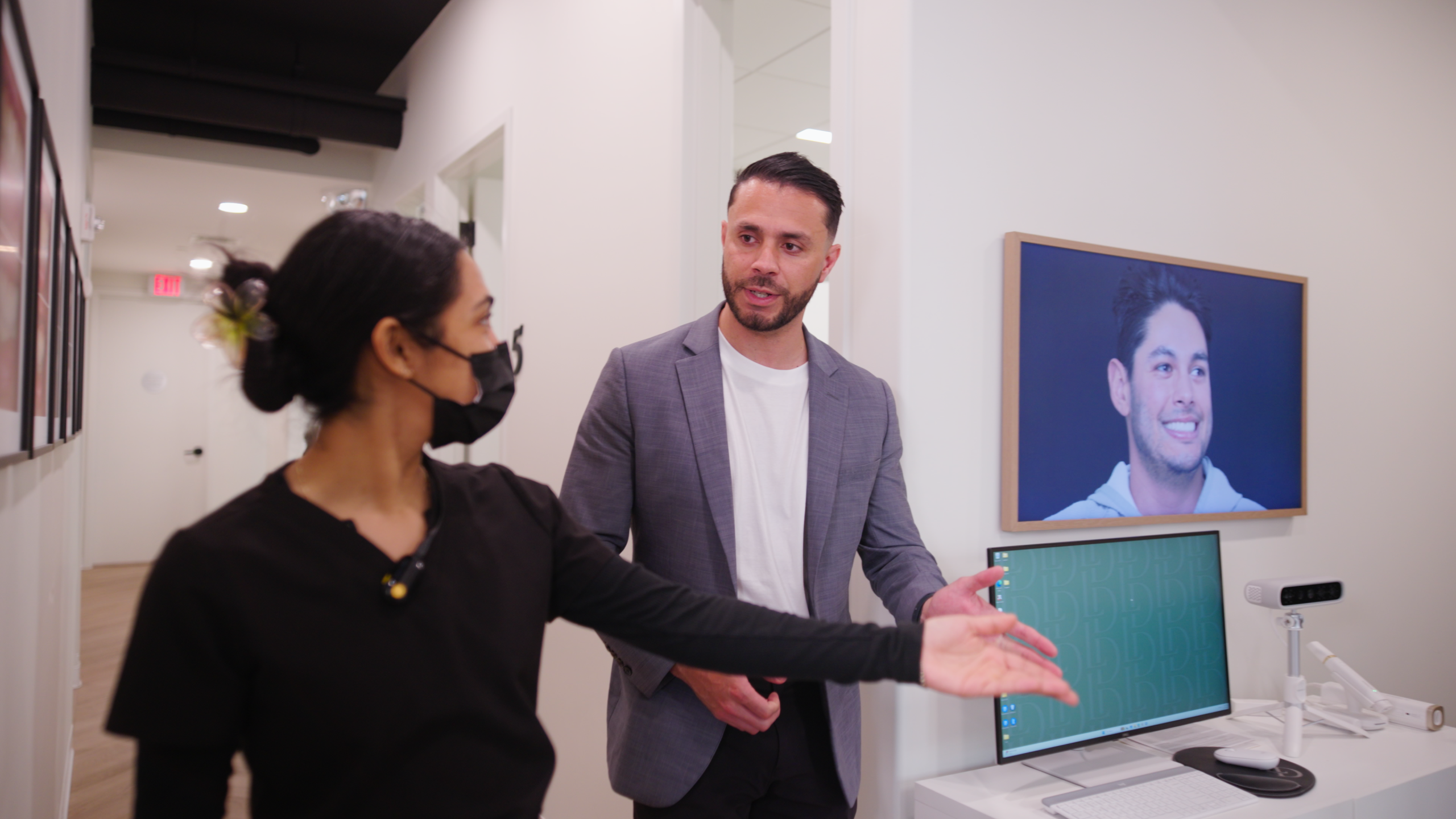
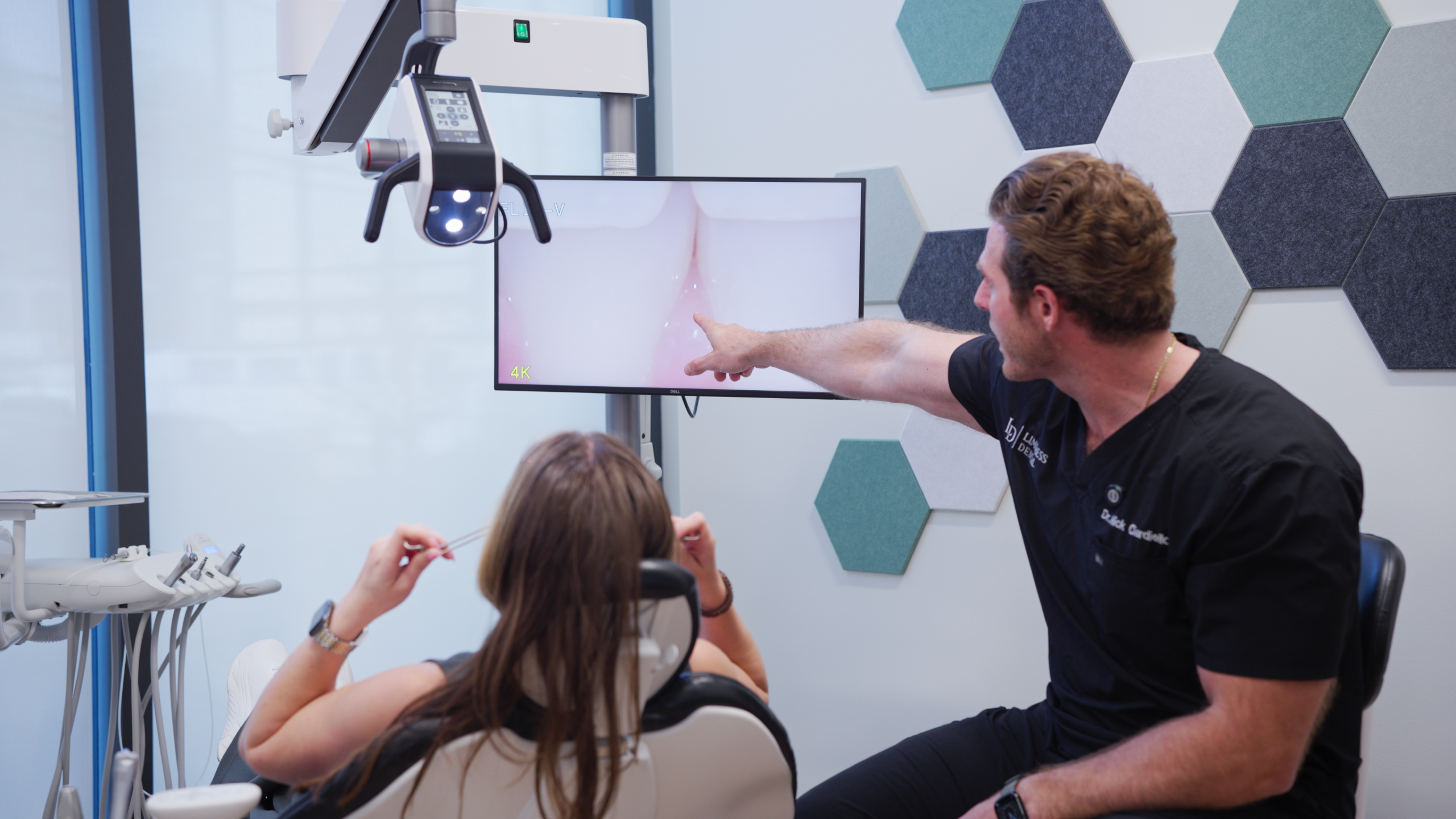
Clinically, I use CBCT 3D imaging and Pearl AI diagnostics to make sure nothing is missed on your x-rays before we plan any cosmetic work. We take a scan (no messy impression material), design your case with our in-house dental lab, and walk you through what your new smile could look like. Our treatment coordinator then lays out every path: insurance-covered portion, payment plans, savings plan pricing, cash discount. You leave knowing exactly what your investment is, month by month.
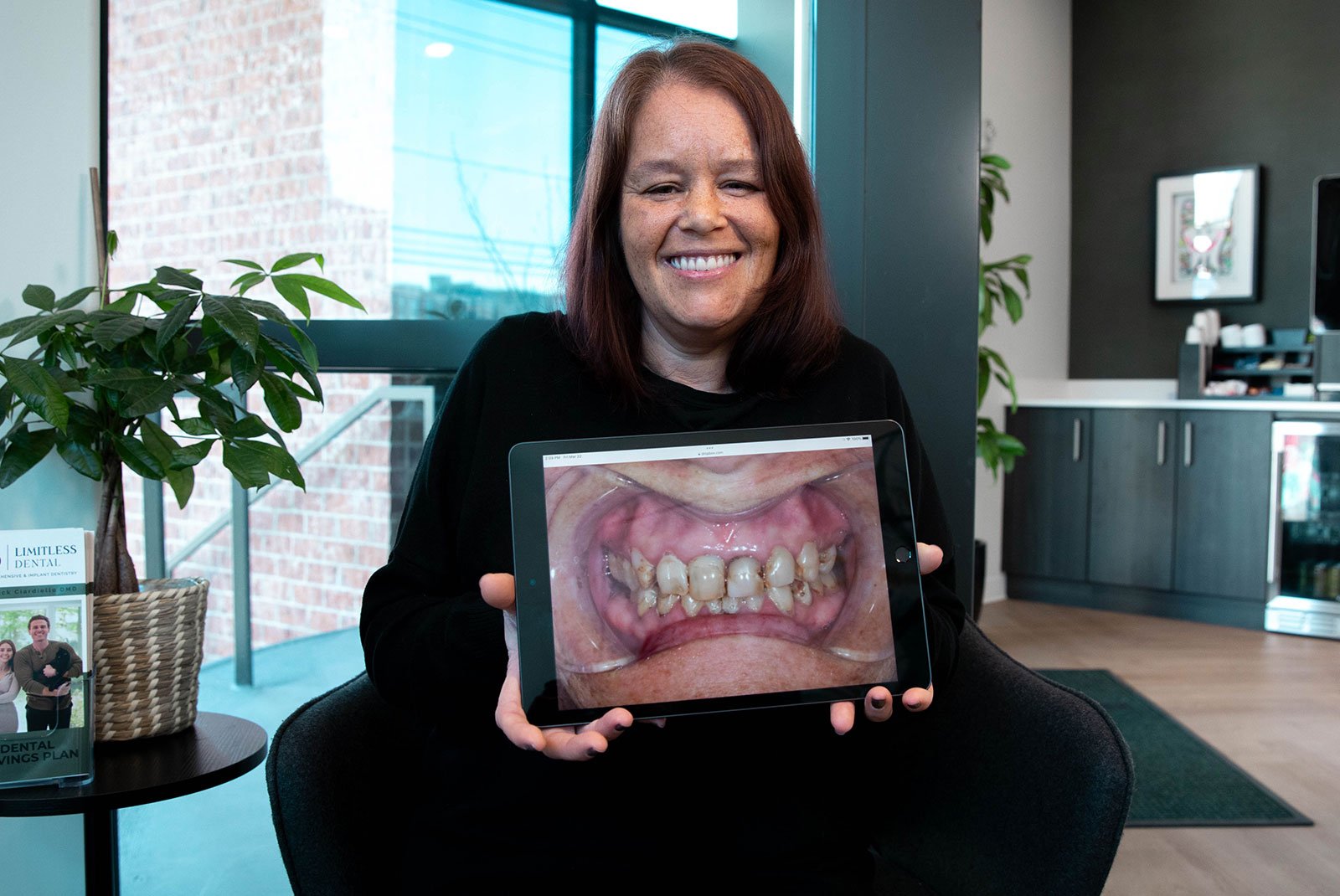
Here is what one of our veneer patients said: “After years of wanting veneers, I finally decided to get them. I was extremely nervous about starting the process and wanted to find someone I could trust with my smile. Their technology is incredible, they make you feel truly cared for, and the results are simply outstanding!” That is Raquel P., and her story is the norm.

About Dr. Nick
Dr. Nick Ciardiello, DMD, FICOI is the lead dentist at Limitless Dental® in Jersey City. He is a Rutgers School of Dental Medicine graduate, a Kois Center graduate. He holds a Fellowship from the International Congress of Oral Implantologists (FICOI, 2022) and has completed over 1,000 hours of continuing education in cosmetic, implant, and digital dentistry. He lectures nationally at conferences including ThriveLIVE and NLC Chicago.
Is cosmetic dentistry ever covered by insurance?
Rarely, and only when there is a documented clinical need behind the treatment. If a veneer or crown is being placed to restore a broken, decayed, or previously restored tooth, most plans will pay the basic-procedure or major-services percentage toward the restoration itself. The upgrade to a cosmetic material, a color match, or a shape refinement is usually your responsibility. Purely elective cosmetic work (whitening, veneers on healthy teeth for aesthetic reasons alone, gum contouring for smile design) is almost never covered.
Why won’t insurance cover cosmetic surgery generally?
Both dental and medical insurance are structured to pay for treatment of disease, injury, or dysfunction. Cosmetic procedures (dental or medical) improve appearance without treating an underlying condition, so carriers classify them as elective and exclude them from coverage. This is why cosmetic plastic surgery, elective vision correction, and cosmetic dentistry all fall into a similar out-of-pocket category. The rule is consistent across the insurance industry.
How can I get my insurance to cover veneers?
You cannot get insurance to cover veneers placed for purely cosmetic reasons. If your clinical situation includes a chipped, cracked, decayed, or previously restored tooth in the area you want treated, the restoration itself may be covered at your plan’s basic or major-services percentage. Bring your treatment plan to the consult and we will submit a pre-authorization to your carrier so you know the covered amount before you commit. If the answer comes back as no coverage, we walk through Cherry, CareCredit, our Savings Plan, or another payment path.
Why does insurance not cover tooth implants?
Historically, dental implants were excluded as “elective.” That is shifting: more plans now include implant coverage with frequency limits and typically capped at your annual maximum. If your plan covers implants, expect the carrier to pay at the major-services rate (typically 50%) up to that annual maximum, then you cover the balance. For multi-implant or full-arch cases like All-on-X, the covered portion is usually a small fraction of the total investment, which is why Cherry, Proceed Finance, and our Savings Plan matter for implant patients.
Are Invisalign, veneers, and bonding covered by insurance?
Invisalign may be partially covered under your orthodontic benefit (if your plan includes one). Ortho benefits are usually a separate lifetime maximum, not part of your annual max, and they apply when the treatment addresses a bite issue. Veneers and bonding are typically not covered when elective; they can be partially covered when tied to a documented restorative need (a chipped or decayed tooth in a visible area). Whitening is essentially never covered.
How do I fix my teeth if I don’t have money?
Start with a consult so you know exactly what you need, in what priority order. What patients think is a $20,000 cosmetic case can often be sequenced into phases: address any active decay or gum disease first (usually covered at least partially by insurance), then work through the cosmetic pieces one at a time on a monthly payment plan. Our Savings Plan makes baseline dental care a predictable annual cost, Sunbit covers smaller balances, and Cherry or Proceed Finance can spread larger cases over 24 to 96 months.
Ready to plan your smile without waiting on insurance?
Book a cosmetic consult at Limitless Dental® in Jersey City. In one visit we take your scan, review your goals, run a full evaluation, and hand you a written plan with every payment option laid out side by side. You leave knowing what your investment is, monthly and total, with no pressure to decide that day. Request an appointment online, or call our front desk at (551) 525-8284. We are at 314 Coles Street in the Cast Iron Loft Building.